
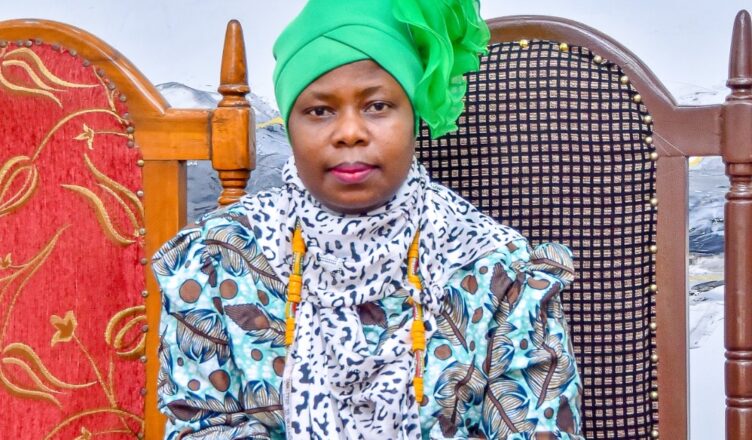

Olori Cecilia Naadensua Matemilola, wife of His Royal Majesty, Oba Prof. Saka Matemilola, the Olowu of Owu Kingdom, has emphasised the need to empower young people through mentorship, cultural education, volunteerism and active participation in community development, describing the youth as critical stakeholders in nation building.
Olori Matemilola made this known this morning during a discussion on radio, on youth development, leadership and the role of traditional institutions in addressing societal challenges. She stressed that building a responsible generation requires deliberate efforts from families, schools, traditional institutions, religious organisations and the wider society.
She expressed concern over the declining interest in volunteerism among young people, noting that many now place financial rewards and material benefits above opportunities to learn, acquire experience, build relationships and develop their capacities.
Recalling a recent visit to an organisation in Ghana working on reproductive health and youth-related issues, she observed that young people were increasingly reluctant to volunteer unless financial incentives and refreshments were guaranteed.
According to her, this trend differs significantly from the attitude of previous generations, when young people willingly offered their services to organisations to gain experience, learn new skills, develop networks and contribute to society.
She maintained that young people must understand that personal development goes beyond immediate financial benefits, urging them to embrace volunteerism, networking, good manners and the cultural values that define their identity.
On the challenges of leadership in Nigeria and Africa, Olori Matemilola explained that the problem cannot be attributed solely to the quality of individuals who emerge as leaders but also to the institutions, systems and citizens who collectively shape governance.
She noted that some political leaders place personal interests above public service, forgetting their campaign promises after assuming office. However, she argued that citizens also have an important responsibility in shaping the economy and holding leadership accountable.
To illustrate the importance of civic awareness, she recalled asking members of the public whether they considered themselves stakeholders in the Nigerian economy. While some answered in the negative, one respondent demonstrated an understanding of citizenship by explaining that being born, educated and employed in Nigeria, paying taxes and contributing to economic activities made him a stakeholder.
She observed that many Nigerians fail to recognise their importance in nation building, stressing that government and national development cannot exist independently of the people.
“Without the people, there is no government. The people make the country, and everyone has a responsibility to contribute to its development,” she maintained.
Addressing the importance of mentorship, the Olori identified technology as both an opportunity and a challenge in the upbringing of young people. She expressed concern that some members of the younger generation, particularly Generation Z, have become overly dependent on information obtained online, sometimes believing they know everything without being willing to learn from people with practical experience.
She explained that mentorship provides younger people with the opportunity to understand the experiences, struggles, mistakes and achievements of those who have gone ahead of them.
According to her, effective mentorship helps young people make informed decisions, develop leadership qualities and avoid mistakes that could hinder their personal and professional growth.
Olori Matemilola further called for a stronger emphasis on cultural education in schools and homes, arguing that young people must understand their history, traditions, values and responsibilities before they can fully appreciate their role in society.
She urged educational institutions to go beyond academic instruction by teaching children the cultural values, discipline and civic responsibilities needed to become responsible citizens.
She also emphasised the important role parents must play in preserving cultural identity and raising children who understand their heritage.
Highlighting the contribution of traditional institutions to youth development, she explained that traditional leadership remains an important platform for community transformation and social development.
She noted that the palace of the Olowu of Owu Kingdom has a library established to encourage young people to read, learn about their history and understand their cultural heritage.
She encouraged young people in the community to take advantage of the facility, describing access to knowledge and cultural awareness as important tools for developing responsible citizens.
Olori Matemilola also advocated stronger collaboration among traditional rulers, religious leaders and Community Development Associations in addressing challenges affecting young people and communities.
She maintained that traditional institutions were established to serve the people and should not limit their responsibilities to ceremonial functions. Rather, they should actively support vulnerable members of society, promote education, encourage peaceful coexistence and provide solutions to local challenges.
She cited the various community development initiatives associated with the Olowu’s palace, including the OHI Project and the establishment of a Conflict Resolution Centre, where community members can access free services.
According to her, such interventions demonstrate how traditional institutions can contribute meaningfully to community development without waiting for government intervention in every situation.
She expressed appreciation for her husband, Oba Prof. Saka Matemilola, whom she described as a leader actively involved in education and the development of children and the wider community.
Olori Matemilola concluded that empowering young people requires a collective commitment to nurturing their talents, preserving cultural values, providing mentorship and creating opportunities for meaningful participation in society.
She stressed that young people should move beyond complaining about leadership challenges and begin to see themselves as active participants in finding solutions.
She called on all stakeholders to invest in the next generation, noting that a nation that deliberately educates, mentors and empowers its young people is laying a solid foundation for sustainable development, responsible leadership and a better future.