

By Olamilekan Jaji
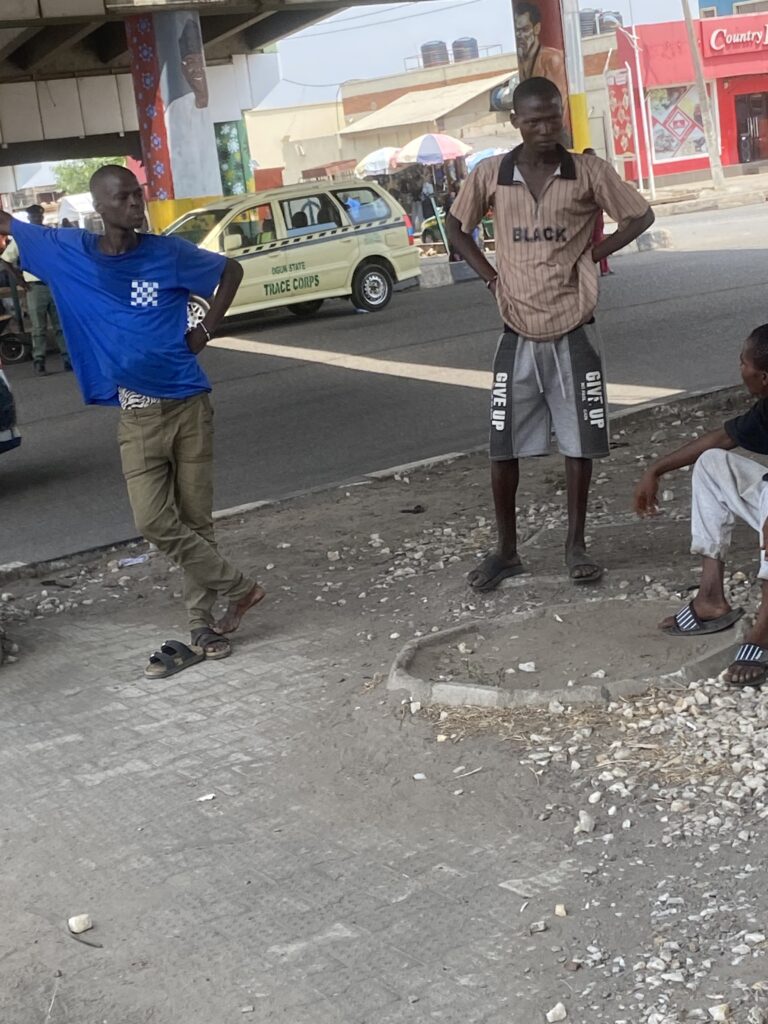
Beneath the concrete span of Okelewo Bridge popularly known as Tarmac in Abeokuta, a different city awakens when the traffic above slows and the sun begins to set.
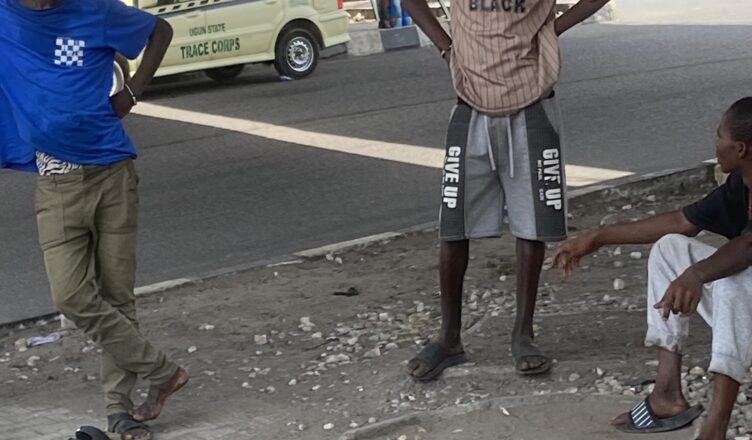
What appears, at first glance, to be a gathering of idle youths around petty hackers is in fact a growing cluster of street urchins and underage miscreants, who have made the underside of the bridge their base. Some are barely in their teens; looking very unkept with one addiction or the other.Many of them have dropped out of school, or never attempted school beyond elementary stage. A few claim they never attended at all as they preferred talking to reporter from distance.
Residents and traders in the Okelewo axis speak in hushed tones about petty theft, harassment of passersby, substance abuse, and occasional violent scuffles that erupt without warning. “They are boys today,” one shop owner, Mr Emeka Nwakego said, “but tomorrow they may become something else.”
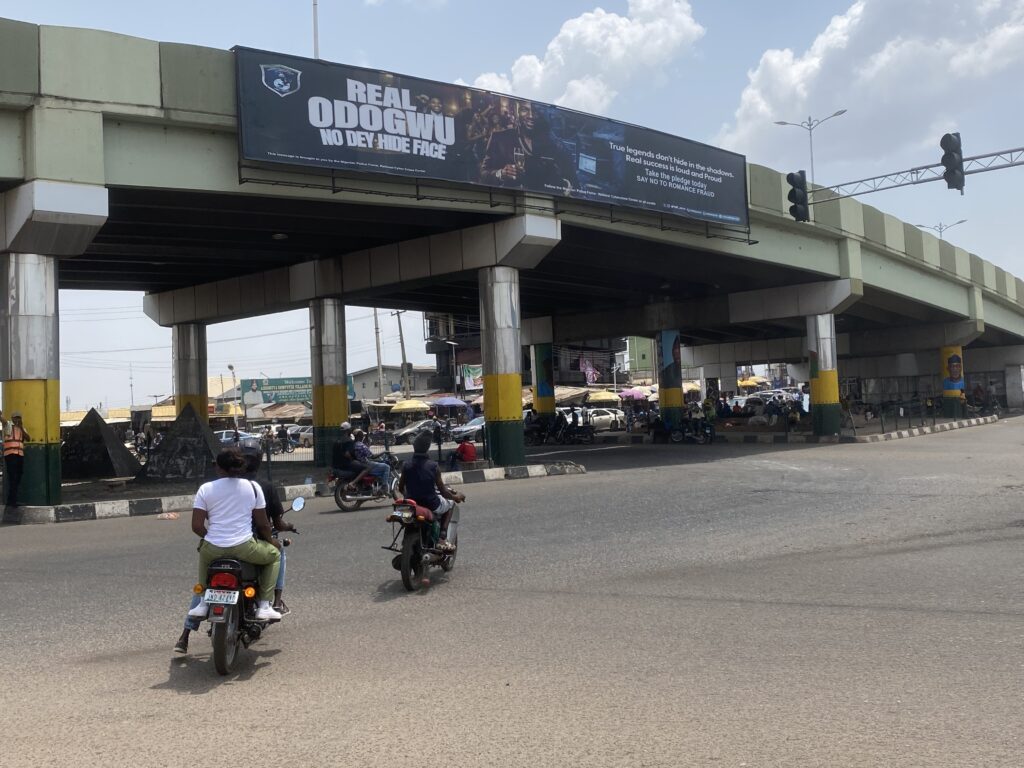
A Breeding Ground for Crime
An on-the-ground visit reveals a troubling pattern: young boys sleeping on torn mats on the pavement under the bridge, another gambling in one corners, while some sniffing intoxicants and others running errands for older street figures who operate in the shadows. The bridge has become both refuge and recruitment ground for these group of people.
Security sources admit that such clusters often evolve into organized street gangs if left unchecked. During election cycles, they are particularly vulnerable to political manipulation — hired as foot soldiers to intimidate opponents, disrupt rallies, or incite violence at polling stations.
With the next election season fast approaching, community leaders fear the situation could spiral.
“These children are a waiting time bomb,” a local youth advocate, Kenny Ajayi warned. “If nobody intervenes now, they will be used.”
Poverty, Neglect, and Systemic Gaps
The crisis is not isolated to Okelewo, Sapon, Idishin Ijeja, Kuto Underbridge, Iyano Mortuary Underbridge, etc. Across parts of Ogun State, economic hardship, family breakdown, and lack of social welfare systems have pushed vulnerable minors onto the streets.
Many of the boys interviewed cited hunger, domestic violence, or inability to pay school fees as reasons for leaving home. What they find instead is a street economy that rewards aggression and survival tactics.
One of the very know in political gatherings, Kay known for his strength and struggle in begging for money from personalities despite his Down syndrome disability.
He said “I’m an orphan and I have to provide for my self. I’ve been on the street since I was young.”
Another with evidence of drug abuse, Sikiru Onabiyi who lives in their family house in Omida Ibara, said “money is in town, that is why I’m always on the road. I don’t steal I beg for money and that is how my needs are met.”
There is little evidence of structured rehabilitation efforts in the area. Occasional police raids disperse the youths temporarily, but without follow-up social intervention, they inevitably return.
The Political Risk
History has shown that unemployed, disillusioned young people are easy targets for exploitation. In volatile political environments, they can be mobilized quickly — and dangerously.
Political analysts warn that ignoring such clusters ahead of elections is a security miscalculation. “Prevention is cheaper than crisis management,” an observer, Titilayo Olojede noted. “Once violence starts, it becomes harder to contain.”
A Call for Immediate Action
The situation under Okelewo Bridge calls for more than enforcement. It demands coordinated intervention:
• Comprehensive identification and documentation of the affected minors.
• Rehabilitation and counseling programs to address addiction and trauma.
• Vocational training and skills acquisition centers tailored to market needs — mechanics, tailoring, ICT, carpentry, and creative arts.
• Partnerships with NGOs and faith-based organizations to provide mentorship and reintegration support.
• Community policing initiatives that focus on prevention rather than periodic crackdowns.
The government of Ogun State must treat this not merely as a nuisance problem but as a social emergency.
Removing these children from the streets without offering alternatives will only shift the problem elsewhere. Providing them with skills and structured opportunity, however, could transform a looming threat into a productive workforce.
Under the shadow of Okelewo Bridge lies a choice: ignore the warning signs and risk future instability, or invest in rehabilitation and reclaim a generation before it is lost to crime and political violence.
The clock toward the elections is ticking. The time to act is now.