

By Niyi Maraiyesa
Every culture has its defining moments. For the Ijebu people of Ogun State, the annual Ojude Oba Festival remains one of the most enduring symbols of identity, unity, and heritage. For decades, the festival has served as a grand platform where sons and daughters of Ijebuland gather to pay homage to the Awujale, celebrate their history, and showcase the rich traditions that have distinguished the Ijebu nation among the Yoruba race.
Yet, as Ojude Oba continues to gain international attention through social media, a critical question is emerging: where do we draw the line between cultural celebration and social media spectacle?
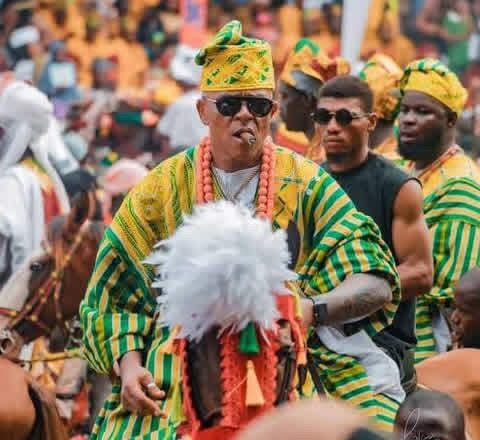
The question became even more relevant in recent years following the emergence of Farooq Oreagba, whose striking appearance during the festival captivated millions of people across the world. Dressed elegantly, riding majestically on horseback, and often seen with a cigar, Oreagba became an instant social media sensation. His images dominated timelines, fashion blogs, and international conversations about Ojude Oba.
To many, he represented confidence, style, and cultural pride. To others, however, the global fascination with his cigar-smoking image raised concerns about whether the focus was gradually shifting away from the cultural significance of the festival itself.
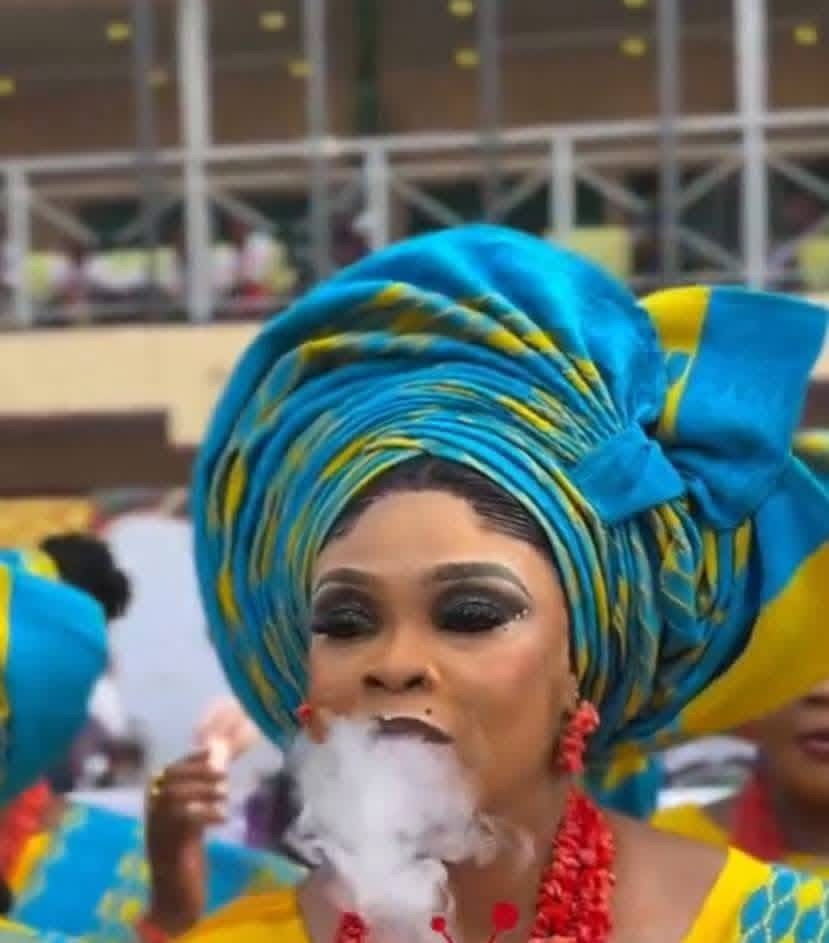
This year’s edition of the festival introduced another moment of public debate. A woman, elegantly dressed in traditional Aso Oke attire, was widely photographed while smoking tobacco. Predictably, the images spread rapidly across social media platforms, generating admiration from some quarters and criticism from others.
The controversy surrounding such images is not necessarily about personal choices. Individuals are entitled to their lifestyles and forms of self-expression. The deeper concern lies in what these viral images communicate to the outside world about Ojude Oba and, by extension, Ijebu culture.
For many observers who are unfamiliar with the history of the festival, social media often becomes their first point of contact with Ojude Oba. What they see online may shape their understanding of the event. If tobacco-smoking personalities become the dominant images associated with the festival, there is a risk that outsiders may mistakenly conclude that such practices are central elements of Ijebu culture.
They are not.
The true essence of Ojude Oba is found in the values that have sustained the festival for generations. It is found in the homage paid to the Awujale. It is found in the colourful parade of the Regberegbe age-grade groups. It is found in the display of respect, discipline, family heritage, communal unity, and cultural pride. It is found in the magnificent horse-riding traditions of the Balogun families and the celebration of a people who have preserved their identity despite the pressures of modernization.
Neither tobacco nor cigar smoking occupies a central place in the cultural identity of the Ijebu people. These are personal choices, not cultural symbols.
Unfortunately, the age of social media rewards what is unusual, controversial, or visually striking. A single photograph can attract more attention than the centuries-old traditions the festival seeks to preserve. The danger is that cultural festivals may gradually become stages for personal branding rather than platforms for cultural education and preservation.
This is not to suggest that Ojude Oba should resist modernity. On the contrary, the festival’s growing global popularity should be celebrated. The international recognition has boosted tourism, attracted investment, and elevated the profile of Ijebuland on the world stage. However, growth should not come at the expense of cultural authenticity.
As custodians of culture, community leaders, participants, and media practitioners have a collective responsibility to ensure that the narrative remains balanced. Social media moments may attract global attention, but they should not overshadow the traditions, values, and history that make Ojude Oba truly remarkable.
The festival’s greatest strength lies not in viral photographs but in its ability to unite generations, preserve heritage, and reinforce the identity of the Ijebu people. Long after social media trends fade, those cultural values will remain.
As another edition of Ojude Oba passes into history, perhaps the conversation should move beyond who wore what or who smoked what. Instead, we should focus on the larger story—a story of a proud people, a respected monarch, and a cultural institution that continues to stand as one of Africa’s finest expressions of heritage and communal pride.
The challenge before us is simple but important: to ensure that in the pursuit of global attention, the spectacle never overshadows the culture……