
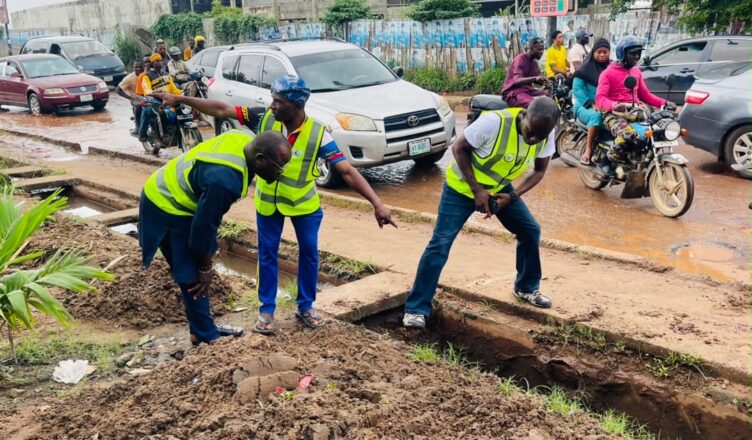

In an era where climate vulnerability and infrastructural deficits increasingly threaten urban centers across Nigeria, media practitioners in Ogun State are demonstrating that community development requires more than just passive reporting.
Members of the Nigeria Union of Journalists (NUJ), Ogun State Council Federated Chapel, took direct civic action on Friday by executing a comprehensive drainage-clearing exercise along the heavily impacted Oke-Ilewo secretariat axis in Abeokuta to mitigate localized flooding and soil erosion.
The initiative highlights a growing shift toward participatory journalism, where media bodies actively intervene in the socio-environmental challenges of the host communities they cover.
Civic Responsibility Meets Environmental Action
The Oke-Ilewo corridor, a major commercial and administrative hub in the state capital, has long suffered from surface runoff during heavy rains—a crisis exacerbated by siltation and blocked drainage channels.
Speaking on behalf of the Chapel Chairman, Comrade Juwon Opayemi, the Vice Chairman, Comrade Jaji Olamilekan, emphasized that media professionals must view themselves as active stakeholders in national development.
“We are not just media practitioners; we are part of the society, and the development of the society is our responsibility,” Olamilekan stated during the exercise. “The blockage of this drainage is the key reason for the flooded road, a situation we are confident will improve after today’s work.”
Olamilekan further advocated for a collaborative model of urban management, calling on private enterprises, business owners, and corporate bodies operating along the Oke-Ilewo axis to invest in the maintenance of public infrastructure to ensure road accessibility.
Sustainable Solutions: From Direct Action to Advocacy
While direct physical intervention provides immediate relief, long-term environmental sustainability relies on public behavioral change and policy enforcement.
Highlighting the dual approach of action and advocacy, the Secretary of the Chapel, Babalola Gafar, noted that the exercise serves as a practical demonstration of civic duty while reinforcing the media’s role in public sensitization.
“As members of the media, we understand the power of advocacy and public awareness,” Gafar said. “We will continue to use our various platforms to sensitize members of the public on the importance of proper waste disposal and the need for everyone to take responsibility for keeping our environment clean.”
Gafar cautioned that community clearing exercises are only a temporary fix unless supported by responsible civic habits and sustained government oversight. He urged local residents, commuters, and relevant municipal agencies to guard against indiscriminate waste disposal to prevent future flooding.
Urban flooding in rapidly expanding Nigerian towns poses severe economic costs, including road degradation, property damage, and heightened public health risks. By stepping into the gap, the Ogun NUJ Federated Chapel sets a strategic precedent for civil society organizations: leveraging collective action to safeguard community assets.
As climate patterns grow increasingly unpredictable, initiatives like this underscore a crucial lesson for urban centers across the country—sustainable development requires a joint effort between active citizens, an engaged press, and responsive government institutions.